
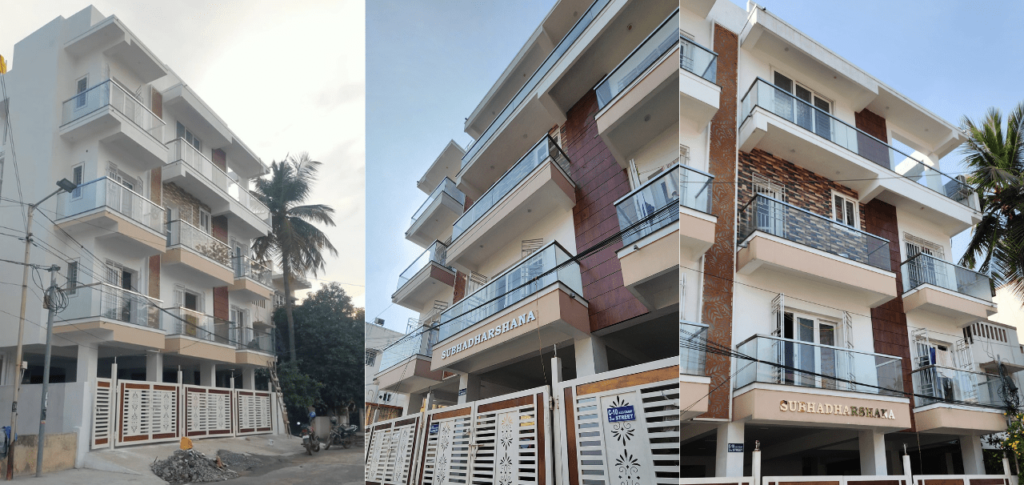
If you own an ancestral property, an independent house on a prime plot, or vacant land of 1 to 4 grounds in Chennai—such as in Madipakkam, Velachery, Nanganallur, Keelkattalai, Medavakkam, or along the OMR corridor—you are sitting on significant latent wealth. Traditionally, landowners considering liquidity or retirement would simply sell the plot outright. However, outright sale triggers hefty capital gains tax, forfeits future appreciation, and eliminates the opportunity to own brand-new premium rental flats for the next generation.
This is why an increasing number of property owners are partnering with reputable joint venture builders in Chennai. Through a structured Joint Development Agreement (JDA), landowners can monetize their property, receive modern built-up residential flats or commercial spaces, secure substantial interest-free refundable deposits, and generate lifelong rental income—all without investing a single rupee in construction.
In this authoritative guide, the legal and development team at Grihalaya Builders explains how real estate joint ventures work, typical sharing ratios, tax benefits, and crucial legal protections every landowner must demand.
1. How a Real Estate Joint Venture Works (Step-by-Step)
A Joint Venture (JV) is a mutually beneficial partnership between a landowner and a civil builder:
- Land Contribution: The landowner contributes the vacant land or old building plot.
- Development & Construction Capital: The builder contributes 100% of the financial capital, architectural planning, CMDA approvals, construction labor, premium materials, and sales marketing.
- Sharing Ratio Allocation: Upon project completion, the total constructed super built-up area (and corresponding undivided share of land / UDS) is divided between the landowner and the builder according to an agreed percentage (e.g., 50:50 or 55:45).
- Retain or Monetize: The landowner can retain their allocated flats for family residence or passive rental income, or request the builder to sell their share at market rates to receive direct cash proceeds.
2. Joint Venture Sharing Ratios in Chennai (2026 Guidelines)
The exact sharing ratio between the landowner and the builder depends on several critical urban parameters:
| Locality Profile in Chennai | Typical Ratio (Landowner : Builder) | Key Influencing Factors |
|---|---|---|
| Prime Urban Hubs (Adyar, Besant Nagar, Anna Nagar) | 60:40 to 65:35 | Exceptionally high land value, premium apartment resale velocity, road widths > 40 feet unlocking higher FSI. |
| South Chennai Growth Belts (Madipakkam, Velachery, Nanganallur) | 50:50 to 55:45 | High demand for residential flats from IT professionals, excellent Metro connectivity, balanced construction feasibility. |
| Emerging Suburban Corridors (Medavakkam, Kovilambakkam, Perumbakkam) | 45:55 to 50:50 | Lower land guideline values; higher proportion of builder capital required for infrastructure, elevators, and amenities. |
3. Financial & Tax Advantages for Landowners
Compared to an outright sale, a joint venture provides distinct wealth multipliers:
- Zero Capital Outlay: You never pay for municipal approval fees, architect blueprints, structural engineers, cement, steel, or construction labor.
- Significant Wealth Multiplication: Selling raw land yields a one-time cash lump sum. Developing modern multistory apartments on that same land often yields 40% to 70% higher overall value upon completion.
- Perpetual Rental Income: Retaining 2 or 3 finished flats provides strong, inflation-hedged monthly rental yields for retirement security.
- Tax Optimization Under Section 54: Under Indian Income Tax laws (Section 54/54F), capital gains arising from transferring land can be largely offset by acquiring newly constructed residential units in the same project, shielding you from massive tax liabilities.
4. Crucial Legal Safeguards Every Landowner Must Insist On
While joint ventures are highly lucrative, partnering with unverified or inexperienced builders can lead to stalled projects, delayed handovers, or legal disputes. At Grihalaya Builders, we uphold strict institutional legal transparency with the following protections:
A. Registered Joint Development Agreement (JDA)
Never commence on an informal Memorandum of Understanding (MOU). The JDA must be officially registered with the Sub-Registrar Office, detailing exact flat allocations, car parking numbers, floor-by-floor specifications, and definitive project handover dates.
B. Specific, Restrictive General Power of Attorney (GPA)
The builder requires a GPA to apply for CMDA/Corporation approvals and sell their allocated share of flats. However, the GPA must be strictly conditional: it should explicitly prohibit the builder from creating mortgages or encumbrances over the landowner’s allocated share.
C. Delay Penalty & Liquidated Damages Clause
A reputable builder should confidently commit to a realistic construction timeline (typically 12 to 18 months for an apartment building) backed by a monthly delay compensation clause paid directly to the landowner in the event of unexcused project delays.
D. Clear Demarcation of Flats Before Construction Starts
Avoid agreements where flat allocation is deferred until after completion. The exact flat numbers, directional orientation (e.g., East-facing 3BHK on the 1st floor for the owner), and specific covered stilt car parking slots must be clearly annexed to the registered JDA.
Partner with Grihalaya Builders on Your Land
Do you own a plot or an old house in Madipakkam, Velachery, Nanganallur, Keelkattalai, or South Chennai? Grihalaya Builders offers transparent, high-return Joint Venture partnerships backed by proven civil engineering expertise and ironclad legal safety.
Direct line to our JV directors: +91 9962 10 20 30 |
Email: info@grihalayabuilders.com |
Request a Confidential Feasibility Report
Recent Comments